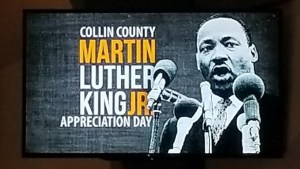
 When I learned our church would host Collin County’s Inaugural Martin Luther King, Jr. Appreciation Day Ceremony, I was thrilled. My daughter was scheduled to spend time with her biological father, but he texted me that he planned to bring her and one of her “besties.” He joked, “I’ll come. Your church needs more black people!”
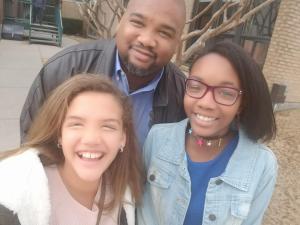
Amen to that.
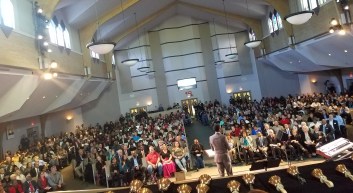
I sing in our chancel choir. When I look down from the choir loft onto the congregation, my daughter’s beautiful brown face always bears a smile in a sea of white. She is surrounded by loving, giving people, but the congregation is not diverse. This morning, my heart soared at the sight of all the black, brown, and ivory faces filling the sanctuary. The scene thrilled me. Never before had I felt the walls of our sanctuary vibrate as everyone sang together. People jumped to their feet and clapped and truly praised God and celebrated the occasion.
Then it was our choir’s time to sing. I dreaded singing the selection, not because the message wasn’t appropriate (it was), but it felt so stereotypically uptight. As predicted, it brought the energetic participation to a screeching halt. It shined a spotlight on the gap between styles of worship – gaps between denominations and within those denominations, race. Our music selection encouraged people to sit and listen. That’s what we tend to do during the sermon, too. Sit. Listen. Be quiet. I remember attending for the first time, and my husband offered an “Amen” during a powerful message. People looked at him like he struggled with Tourrette Syndrome.
Today, I could feel the attendees lift our pastor as he delivered his message about building bridges. At various times, people rose to their feet, applauded, and gave plenty of “Amen’s.” Our pastor remained authentic, yet his voice grew more powerful and his presence, stronger. At one moment he stopped and declared, “God’s house has never looked so good,” and we erupted in celebration of that truth.
He also said, more than once, “Please come back on Sunday.” He meant it. He wanted everyone, especially those without a church home, to come back. And that triggered a twinge of sadness. This sadness stuck with me all day because I suspect they won’t come back. The few who do return might not come again after they sit through a sleep-inducing anthem and are encouraged to remain silently glued to the pews.
We invite; we feed the hungry near and far; we build and repair homes for members in our community; we volunteer at schools, host a legal clinic every month, bring church service to nursing homes, and much more. I don’t know what more we can do on our own. We need others to join the effort and help us.
I love my church home, and I don’t want to have to visit others in order to enrich my daughter’s spiritual experience. I want my church to transform. I also want my brothers and sisters in Christ who don’t look like me to help us. Help us become a richer family. Help us realize Dr. King’s dream to the fullest.

 D.W. Dobbs