
Honoring El Duende

I don’t know about you, but when I hit 40, it seemed like a clock started ticking. I had so many things I wanted to do, and suddenly I was aware of my mortality. Nine years later, I felt disappointed and even resentful of myself. I hadn’t saved enough money, spent nearly enough time outdoors, or finished my novel. I had, however, developed a phobia of driving on the highway or in any unfamiliar city. My world was getting smaller, and I was feeling trapped, like I’d boxed myself into a corner. I kept hearing myself say, “I used to be interesting” or “I used to have an interesting life,” and as 50 approached, a sense of urgency about living more fully washed over me.

Something weird was happening, too. For months, nearly every night, I’d awaken around 2am with a strange and discomfiting sensation in the lower part of my chest, like someone was pouring hot liquid over me, but from inside me. It wasn’t heartburn. I didn’t have any pain, shortness of breath or other symptoms of a heart attack. I saw a cardiologist, and my EKG, echo-cardiogram, and stress test were normal. But night after night, I’d be pulled out of my sleep, albeit gently, by this unnerving, uncomfortable heat around my heart.

I mentioned this baffling happening to a dear friend who is a therapist and mindfulness expert.
He told me with certainty, “You’re meant to create, so do something creative, and it’ll go away.”

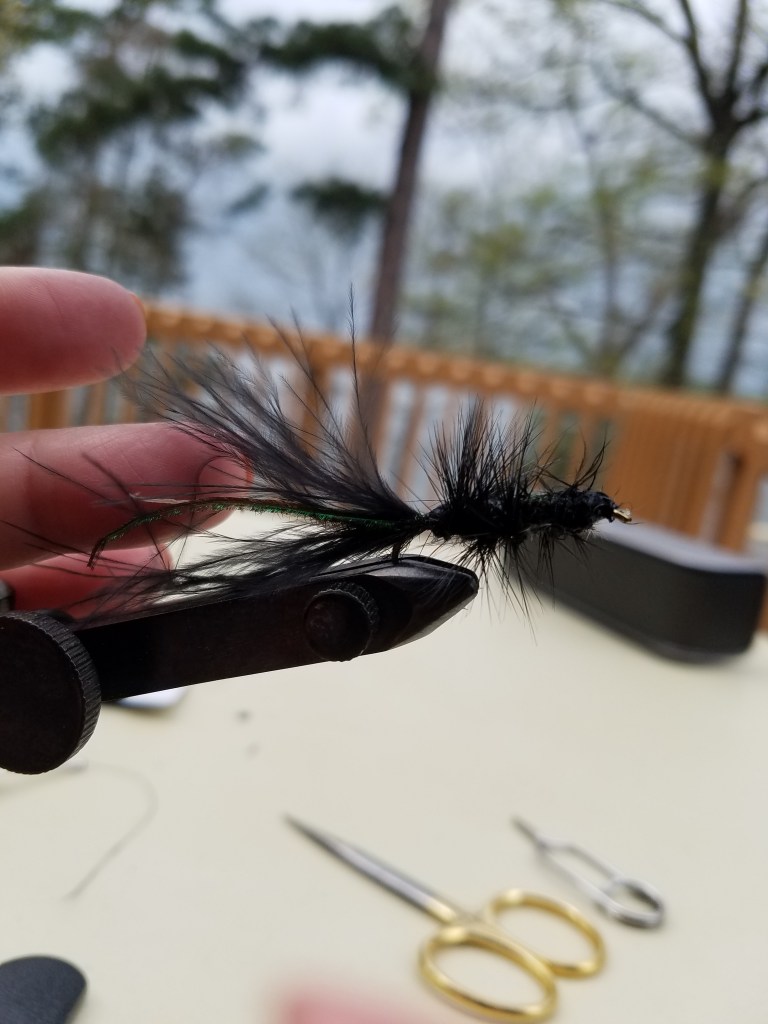
Doing something creative wasn’t going to hurt me, so I doodled and tinkered a little bit on the piano. The sensation went away that very night. I kept it away by tying flies, journaling (using a beautiful fountain pen my husband gifted me), and seeking other opportunities to create.
This image has an empty alt attribute; its file name is 20200314_143118.jpg

I turned 50 in January of 2020, and I had big plans. I vowed to have a mid-life (I prefer “GenX”) awakening – to actively participate in making my life and myself interesting again. I started going to a yoga studio. I had a small birthday party and sang with our band (singing in front of people like that was something I never thought I’d do). I was on a roll and feeling really good. Then the coronavirus invaded — the dream crushing, demoralizing, party-pooping virus and the myriad of psychosocial ramifications of the never ending efforts to “flatten the curve.” The yoga studio closed. The band disbanded. What a year to attempt a renewal.

While I was 50, I did get two things checked off my list: kayaking and visiting Caddo Lake. Thanks to my friend and colleague Beka, I not only went kayaking, but I kayaked on Caddo Lake. It was magical, and I wanted a whole lot more of that kind of stuff. I wanted to get out in the wild and do brave things. During the day, I longed to see a horizon without man-made obstructions and during the night, only stars and the moon. I yearned to hear nothing but water moving, birds chirping, and other animal noises that might frighten me a bit. I wanted to scuff up my knees, go deer hunting again and take my time skinning and quartering my kill. (I know it sounds bizarre, but I find the process calming if I’m not rushed.)

Then I remembered a book from my graduate school days: Women Who Run with the Wolves by Clarissa Pinkola Estés, PhD. Rather, I remembered the title of the book. I couldn’t recall a thing from within it. I desperately wanted to read it, and I scoured our bookshelves with no luck. I noticed I’d accumulated a bunch of Audible credits, and they were going to vanish if I didn’t redeem them, so I downloaded the book. Immediately, I realized that my incredibly interesting twenty-something self had been too young to appreciate, much less commit to memory, the messages within the book. However, the words warmed the soul of my older, slightly bruised and battered self. Listening to Dr. Estés’ intoxicating voice, I felt like she was talking, not reading, to me. Only me. She was sharing with me, an audience of one, the stories her elders told her. I wished to continue our special time together, so I downloaded a bunch more of her books: Dangerous Old Woman, Mother Night, The Creative Fire and others. Right now, I’m listening to Late Bloomer in which she talks about El Duende, the creative fire burning within all of us.

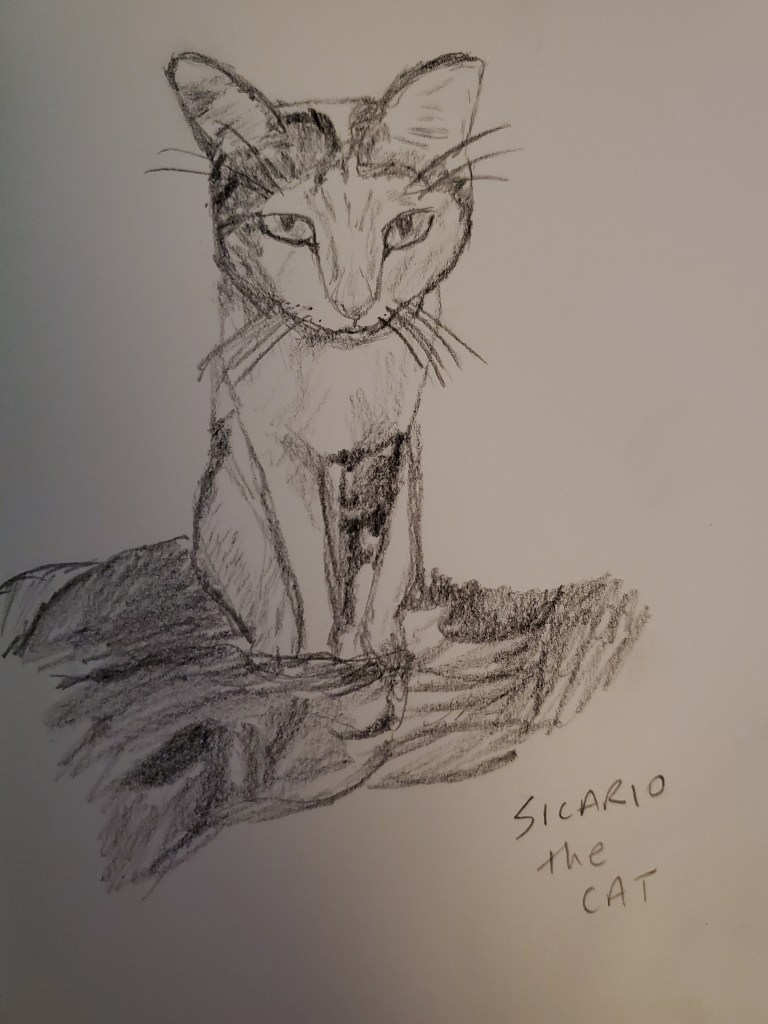
I turned 51 while battling the coronavirus. I know symptoms vary (and for that reason I call it the psycho virus), but most people who’ve had the psycho virus understand the foggy brain and fatigue that come with it (and then linger). One afternoon, I was sitting on the couch, lifelessly staring at nothing while wondering if my sense of smell would ever return, and I felt that sensation stirring in me, only now it had a name. El Duende was giving me a gentle nudge. I didn’t have much energy to be creative, but I decided I could put a pencil to paper and sketch something. I sketch fairly well as long as the object is upside-down and I don’t think about what I’m drawing. It’s actually a technique described in Drawing from the Right Side of the Brain. (If you think you can’t draw, this might blow your mind.) I created a mediocre drawing of a flower. Then I sketched the worst pet I’ve ever had, Sicario the cat. I sketch or write every day. The hot, unnerving feeling in my chest hasn’t returned.
I believe God speaks to us softly and gives us gentle nudges. If we don’t listen, the Almighty will speak more loudly and even rattle us. Maybe El Duende works the same way. It starts as a little fire burning within us, and if ignored, it’ll get hot enough to wake us from a deep sleep (or cause angst, anxiety, restlessness, or feelings of a midlife crisis). While Dr. Estés writes like a poet, shares folktales, and elaborates beautifully about archetypes, our desire to create is concrete and undeniable. Trauma expert Bessel Van Der Kolk acknowledges this in The Body Keeps the Score. “We are designed to create,” he writes, “without imagination, there’s no hope.” There appears to be a spiritual and a scientific component to our drive to create, to make things.

When it comes to creating, especially later in life, our culture may tell us you’re too old, it’s been done, it’s not good enough, you’re too busy. In response to that, here’s a recommendation from Late Bloomer: “misbehave with integrity.” Do no harm to yourself or others, but misbehave. Misbehaving with integrity means we give the finger to those who try to tell us we’re to old or too busy or any of that nonsense.

I want my year of 51 to involve listening to Dr. Estes’ books, allowing my creativity to flow, and misbehaving with integrity. I plan to visit Caddo Lake many times, kayak with Beka, and identify other ways to be creative. Oh, yes, and publish my novel, which I have finally finished.

I’ll keep you posted, and let me know if you want to join in. Maybe it can be one of those challenges. Challenges are a thing, right? I promise my creativity won’t involve Gorilla Glue or eating Tide Pods.

http://www.clarissapinkolaestes.com/

https://www.drawright.com/

https://www.penguinrandomhouse.com/books/313183/the-body-keeps-the-score-by-bessel-van-der-kolk-md/
Intoxication Manslaughter – An Absence of Intent Means Nothing to Victims

In the early hours of a Christmas morning, I got the call about a fatality. A Richardson family of five had been reduced to four because a man decided to drink and drive. The family had been coming home from a Christmas Eve service. The drunk had been partying up in McKinney.

In the days after Christmas, I sat with the couple in the living room of their immaculate apartment. I’ll never forget the look on the father’s face when he learned that the maximum penalty for this crime — the crime that killed his baby boy and injured his wife and daughters — was 20 years.

“But this is Texas,” he said. “You have the death penalty here.”

The family had moved here from Mexico a few years earlier. Texas had a reputation for being tough on crime. I can’t describe how painful it was to explain how his baby boy’s life wasn’t worth more than twenty years, yet my pain surely paled in comparison to his. I talked to the man about intent and that drunk drivers didn’t necessarily wake up in the morning with a plan to kill someone, even though their actions were indeed deadly. He responded that an absence of intent provided no relief. His son was nonetheless dead. His grief was nonetheless brutal.

As a victim advocate, I’ve witnessed the grief inflicted on too many families by drunk drivers. Several of them stick. The 2002 killing of Sandra Escamilla and her unborn baby (she was 7 months pregnant). In the same crash, the killer caused serious injury to Catherine Swiatocha and her then 10-year-old son. Years later, another drunk driver killed a woman– a beloved wife, a mother of 2 and 9 months pregnant. In 2011, another woman was going for an evening walk with her best friend when a drunk driver mowed her down — drunk whose family members reportedly tried to keep him from getting behind the wheel. There have been countless cases of cops killed by drunk drivers, often when the officers are helping with a wreck.

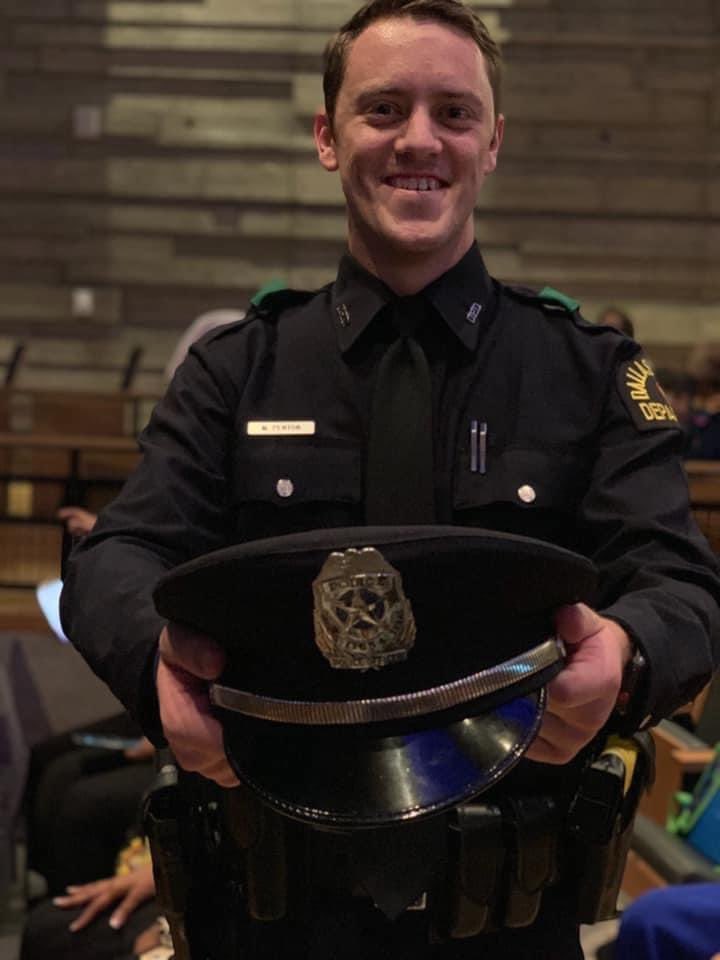
I’ve seen a lot of horrible things over the last 25 years, but I’ve never seen someone smile immediately after killing a person. The drunk who killed Officer Mitchell Penton is not the first person to do that, of course, but it’s the first time I’ve seen it, and it made me feel sick. I considered the fact that enough alcohol can render a person apathetic, which is something a defense attorney will undoubtedly point out. I tried to give him the benefit of the doubt — that he’s not a psychopath, that maybe the guy was so drunk he didn’t realize what he’d done. Then, I spent a few minutes on his social media page, which is littered with profanity, photos of him flipping off the camera, photos and videos of him smoking dope. But he’s “business owner” and wears a cross around his neck, so there’s that. Whether he’s a sociopath or was merely incapacitated by alcohol doesn’t matter. For the victims’ loved ones and those of us who care about our men and women in blue, nothing could make the killing less devastating or the grin less sinister.

It’s been almost 20 years since the Christmas the baby boy was killed, but the memories of that case haven’t faded. The offender received the maximum punishment. Both parents read victim impact statements, and the killer wept. With incredible resilience and mercy, the mom offered forgiveness. The father was gracious, but his statement carried a theme that comes to the surface every time I hear of another tragic intoxication manslaughter: If you’ve been alive long enough to operate a car, you cannot be unaware of the dangers of drinking and driving. We are surrounded by reminders on billboards, tv commercials, radio ads, and slogans, like friends don’t let friends drive drunk are burned into our brains. Who hasn’t heard of MADD? The concept of designated drivers has been promoted for decades. There’s also a notable space between the time you feel the effect of alcohol and the moment you decide to have another drink or switch to water. His words resonate with me every time I meet someone for a beer or a glass of wine. We’re inundated with warnings about drinking and driving, so I don’t think for a minute that this blog post will make a damned bit of difference.

Rest in Peace, Officer Penton.

I suppose I simply felt the urge to say something. It’s Valentine’s Day, which I usually think of as a stupid, fake holiday. But today would’ve have been Mr. & Mrs. Penton’s first Valentine’s Day as a married couple, so I don’t imagine it will ever feel stupid or fake to her. Because of the killer, Officer Penton won’t meet his newborn or help raise his bonus kiddo. The couple has been robbed of celebrating their first wedding anniversary. For the foreseeable future, these milestones and holidays will be marked by tragedy and traumatic grief.

Human Trafficking: a Bold Discussion with Detective Joseph Scaramucci

So far, I’ve only done about a half dozen podcast episodes, yet I’ve already learned that some interviews go better than others. I never know how a guest will act once we hit the record button, so I was delighted to discover that with Detective Joseph Scaramucci, nothing changed. He was the same guy during the interview as he’s been over a beer. The topic of human trafficking is heavy. It can feel like a hopeless situation, but talking about it with Detective Scaramucci, an expert on the subject, left me feeling less hopeless.

Detective Joseph Scaramucci:

Old School Texas Lawman with a Sophisticated Twist

Joseph Scaramucci is an old school Texas lawman with a sophisticated twist. He has a great sense of humor, but he’s also a deep thinker. He’s unusually candid and outspoken — qualities that are common with officers but typically expressed only within the safety of their inner circles. Scaramucci, however, lays it all on the line. In that respect, he reminds me of a honey badger. When I asked why he felt comfortable to speak so freely, he credited his boss McLennan County Sheriff Parnell McNamara for being a good leader who empowers his officers. Without micromanaging or fear, Sheriff McNamara simply lets his deputies do their work.

Throughout our conversation, Detective Scaramucci shared many difficult truths. Here’s one of them: “Law enforcement can’t be victim centered.”

That might sound cold, but it makes sense. Victim advocates, therapists, social workers are victim centered. Law enforcement, Scaramucci explained, “Should be trauma informed but offender focused.”

That doesn’t mean he lacks compassion. (You’ll witness his compassion when the idea of arresting “hookers” arises in the interview.) He knows it’s important to understand how trauma impacts a victim’s thinking and behavior, but he will gladly direct victims to the social workers for in-depth assistance so that he can put on his body armor and take care of business. The man is committed to taking care of business, too. After an hour of recording, we took a short break during which he pulled himself an espresso and, pretending to be a fifteen-year-old girl, finalized a date with a middle aged white guy whom he arrested shortly thereafter.

Throughout the interview, Detective Scaramucci gave shout-outs to those who are doing good work and called out those who aren’t. He praised other law enforcement agencies and nonprofits, like Collective Liberty and Unbound (a global organization with an office in his town of Waco). He also shared his frustration with vigilantes, conspiracy theorists, cops who cling to antiquated thinking, and mom groups on social media who spread ignorance disguised as prevention. He cautioned donors about operations founded and/or run by former members of [insert federal agency here] who go on “rescue missions” to save trafficked children. Too many people believe that someone who has military/law enforcement experience or looks super-duper-tactical automatically knows how to investigate trafficking and extract victims from foreign countries. Sadly, people are falling for the rhetoric of some of these so-called anti-trafficking rescue groups, getting emotionally blackmailed by the #savethechildren movement, and throwing gobs of dollars their way. Without mincing his words, Scaramucci explained that by digging a little deeper into the background of these guys, usually you’ll discover they have no experience with investigating human trafficking. In fact, most have no undercover experience at all.

I’ve only touched on the topics we covered. Despite having to talk by video, the energy was so good that afterward I felt like I needed a nap, kind of like I’d feel after an adrenaline dump. We agreed to meet in person for round two, so he could show us how to spot illicit massage parlors. That eye-opening episode will drop soon, so stay tuned.

The podcast is Slay the Stigma, and it’s hosted by The Counseling Place where I work full-time.

Part one of our human trafficking series will drop Thursday, February 11, 2021.
You can listen to this and other episodes of Slay the Stigma here.

Follow Joseph Scarmucci on Facebook.