
Human Trafficking: a Bold Discussion with Detective Joseph Scaramucci

So far, I’ve only done about a half dozen podcast episodes, yet I’ve already learned that some interviews go better than others. I never know how a guest will act once we hit the record button, so I was delighted to discover that with Detective Joseph Scaramucci, nothing changed. He was the same guy during the interview as he’s been over a beer. The topic of human trafficking is heavy. It can feel like a hopeless situation, but talking about it with Detective Scaramucci, an expert on the subject, left me feeling less hopeless.

Detective Joseph Scaramucci:

Old School Texas Lawman with a Sophisticated Twist

Joseph Scaramucci is an old school Texas lawman with a sophisticated twist. He has a great sense of humor, but he’s also a deep thinker. He’s unusually candid and outspoken — qualities that are common with officers but typically expressed only within the safety of their inner circles. Scaramucci, however, lays it all on the line. In that respect, he reminds me of a honey badger. When I asked why he felt comfortable to speak so freely, he credited his boss McLennan County Sheriff Parnell McNamara for being a good leader who empowers his officers. Without micromanaging or fear, Sheriff McNamara simply lets his deputies do their work.

Throughout our conversation, Detective Scaramucci shared many difficult truths. Here’s one of them: “Law enforcement can’t be victim centered.”

That might sound cold, but it makes sense. Victim advocates, therapists, social workers are victim centered. Law enforcement, Scaramucci explained, “Should be trauma informed but offender focused.”

That doesn’t mean he lacks compassion. (You’ll witness his compassion when the idea of arresting “hookers” arises in the interview.) He knows it’s important to understand how trauma impacts a victim’s thinking and behavior, but he will gladly direct victims to the social workers for in-depth assistance so that he can put on his body armor and take care of business. The man is committed to taking care of business, too. After an hour of recording, we took a short break during which he pulled himself an espresso and, pretending to be a fifteen-year-old girl, finalized a date with a middle aged white guy whom he arrested shortly thereafter.

Throughout the interview, Detective Scaramucci gave shout-outs to those who are doing good work and called out those who aren’t. He praised other law enforcement agencies and nonprofits, like Collective Liberty and Unbound (a global organization with an office in his town of Waco). He also shared his frustration with vigilantes, conspiracy theorists, cops who cling to antiquated thinking, and mom groups on social media who spread ignorance disguised as prevention. He cautioned donors about operations founded and/or run by former members of [insert federal agency here] who go on “rescue missions” to save trafficked children. Too many people believe that someone who has military/law enforcement experience or looks super-duper-tactical automatically knows how to investigate trafficking and extract victims from foreign countries. Sadly, people are falling for the rhetoric of some of these so-called anti-trafficking rescue groups, getting emotionally blackmailed by the #savethechildren movement, and throwing gobs of dollars their way. Without mincing his words, Scaramucci explained that by digging a little deeper into the background of these guys, usually you’ll discover they have no experience with investigating human trafficking. In fact, most have no undercover experience at all.

I’ve only touched on the topics we covered. Despite having to talk by video, the energy was so good that afterward I felt like I needed a nap, kind of like I’d feel after an adrenaline dump. We agreed to meet in person for round two, so he could show us how to spot illicit massage parlors. That eye-opening episode will drop soon, so stay tuned.

The podcast is Slay the Stigma, and it’s hosted by The Counseling Place where I work full-time.

Part one of our human trafficking series will drop Thursday, February 11, 2021.
You can listen to this and other episodes of Slay the Stigma here.

Follow Joseph Scarmucci on Facebook.

No Longer Suffering in Silence

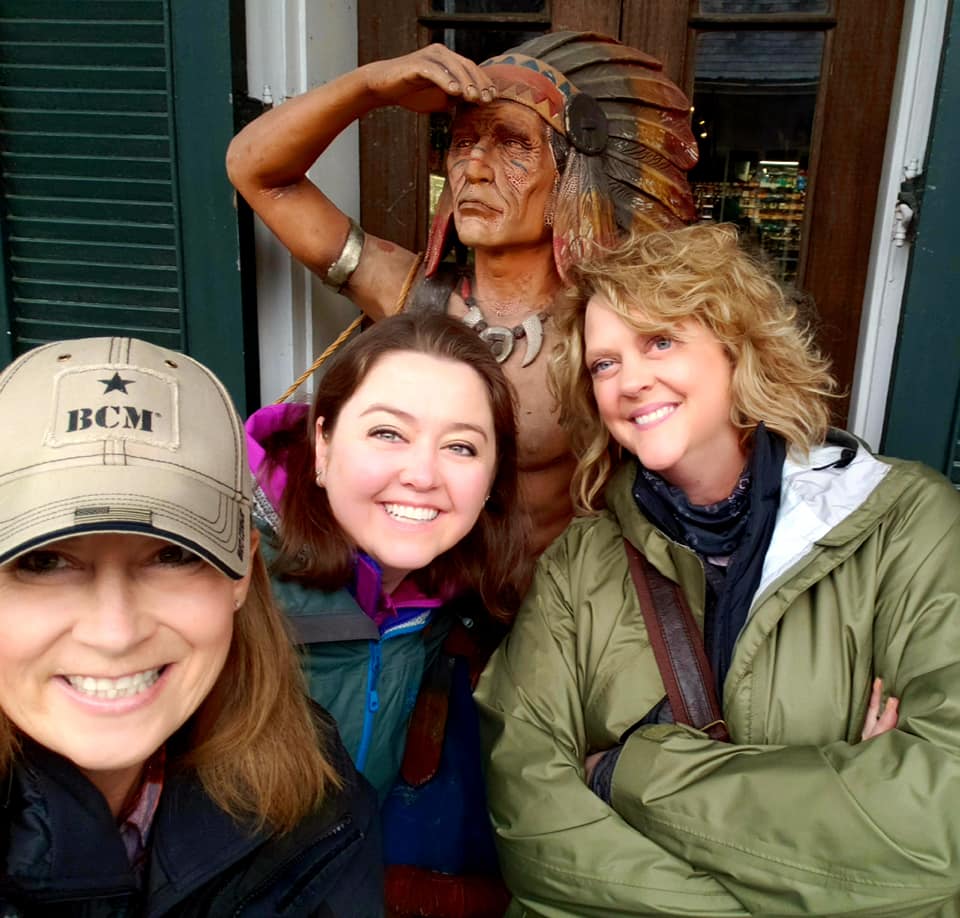
In March of 2019, I spent an afternoon wandering the streets of New Orleans with two strong and wonderful women, Lisa Causey and Melanie Bolke. The three of us had never spent time together without our significant alpha males tagging along, and we had what I still consider a magical experience. It’s one of my favorite days ever. We talked too loudly (ok, yelled a lot) and laughed all day long, everywhere we went — the oyster bar at Bourbon House, in and out of various music joints/bars on Bourbon Street, and tourist-trapping souvenir shops. I felt twenty years younger, and I laughed until I hurt, mostly at Lisa’s nonstop hilarity. I wish I could relive that day, yet it’s one we could never recreate. In fact, the three of us haven’t reunited since then.

Little did I know that Lisa was suffering silently and had been for more than a year. A trifecta of perpetrators had worked her over: Post-Partum Depression, Post-Partum Anxiety, and PTSD. She never showed us even a hint of a struggle, but weeks after that happy day in NOLA, she was in tears at the OBGYN’s office. Thankfully, she and her husband Caleb went there seeking help.

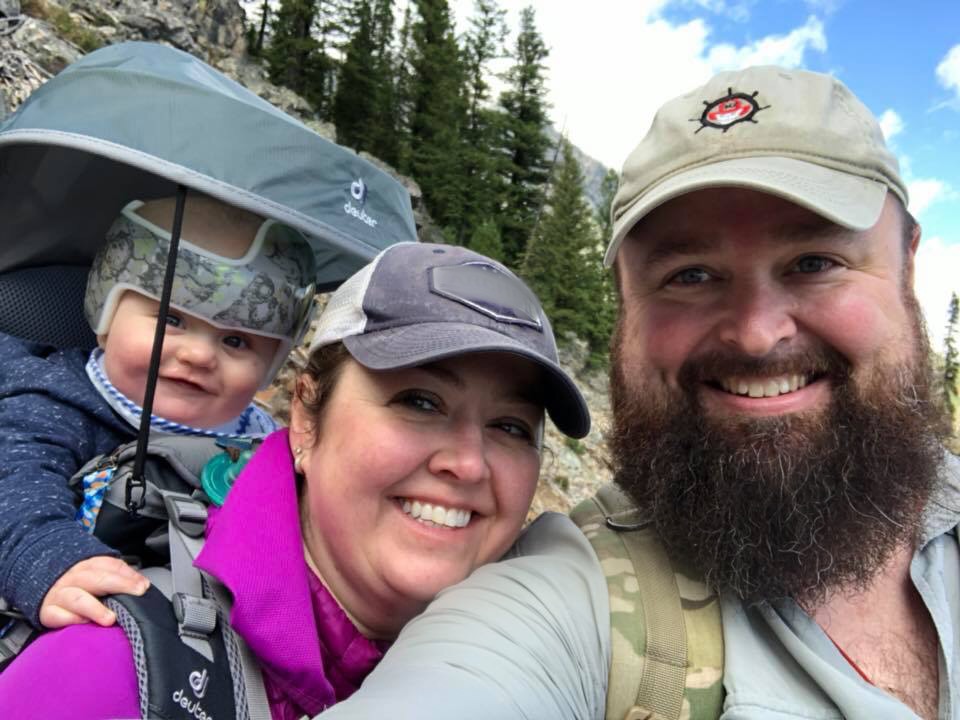
Before I go any further, I have to offer a few facts. Lisa Causey is tough as nails. The woman has grit. She can shoot steel targets with a 9mm from 100 yards away (to those of you who know about shooting pistols, yes, she really did that). She went hiking in the Grand Tetons in Wyoming around Jenny Lake with a baby on her back! (In fairness to Caleb, they took turns.) After completing a bio break during that adventure, they looked up and saw a 150 lb black bear charging them on the trail. Both Lisa and Caleb deployed bear spray, and all four mammals got a nice dose. Then, they continued on around the lake and enjoyed the majestic scenery around them.

I imagine that bear noticed Lisa’s commanding presence. She has a compelling voice and a sharp wit (maybe the bear got a sample of that, too). Even her work is powerful (she’s a colleague in the nonprofit world). There’s a softer side to her, though. She has a wonderful smile, and it shines the brightest when she’s with her family, whom she loves fiercely. She’s practical but kind, and she’s accustomed to offering, not requesting, help.

When Lisa heard about the Slay the Stigma podcast (hosted by The Counseling Place), she bravely offered to share her story. She doesn’t fit the stereotype of a woman who would ever need help, especially with something like depression or anxiety. Lisa knows, however, that the stereotype feeds the stigma and prevents others from seeking assistance from a professional. She also knew that by sharing her experience, she could help others avoid a great deal of suffering.

We sat down together in the makeshift recording studio at The Counseling Place, and Lisa held nothing back. She described her and Caleb’s struggle with unexplained infertility and the painful Mothers and Fathers Days they endured throughout that arduous journey. She provided a vivid description of traumatic labor and delivery, the frantic operating room (it’s jaw dropping), and the eerie feeling of waking up in an empty dark room, with no baby. She recalled the days that followed, visiting Lincoln in the NICU, where he spent his first Christmas. After Lincoln came home, Lisa explained her symptoms of anxiety — how it toyed with her thoughts, causing her to question if Lincoln was really theirs. What if someone made a mistake? After all, neither she nor Caleb witnessed his birth. Finally, she shared how therapy, specifically EMDR (which she described as “whackadoodle”), helped her heal, feel normal again, and enjoy motherhood.

Lisa implores those who are struggling with anxiety or depression of any kind to seek help. I’m grateful for her candor and honored she shared her story with us. Listen for yourself here: Slay the Stigma, Episode 3: Lisa’s Story

Many thanks to Richardson Woman’s Club for sponsoring Slay the Stigma!

To the Facebook group Mrs. Gorman Was my Favorite Teacher Ever!

I love firsts. I get excited about firsts. On November 21, 2020, I had a first for which I hadn’t planned or prepared. To understand the significance of it, we have to go back about thirty-eight years to Richardson North Junior High School.

In 1982, the mere thought of junior high terrified me. I would’ve been content to remain at Canyon Creek Elementary for the rest of my school years. Everything about RNJH seemed intimidating, even menacing. I feared getting lost and being tardy. It wasn’t the threat of detention that scared me but the embarrassment of walking into class late because I was the only kid who couldn’t find her way or figure out the combination on her locker. The “freaks” scared the life out of me. The “jocks” and cheerleaders shined a spotlight on my insecurity. I was a skinny kid who’d neither blossomed nor grown into her face. Certain charming children called me spaghetti legs, bones or bug eyes. My goal for seventh grade was to finish it unnoticed.

The first day of seventh grade, I forced myself to walk into the school, and I successfully fought back the urge to vomit. Further exacerbating my anxiety was the fact that first period was English with Mrs. Gorman. With trepidation, I entered the classroom and learned she’d planted me on the front row. The morning before the second day of school, I stood on the walkway in front of my home, trying to hold back tears. I begged my mother to call the school and ask to change my schedule — any English teacher other than Mrs. Gorman, please! She wasn’t going to entertain that idea, and she provided enough encouragement for me to brave another day.

Fortunately, punctuality was a priority in my family, so I never struggled to be in classroom ten minutes before the bell, which Mrs. Gorman required. In seventh grade, I had no trouble with keeping my mouth shut, and I couldn’t imagine how anyone could not pay attention in her class. Indeed her reputation for eraser-throwing was a deterrent to daydreaming, but her zeal and unpredictability were enough to keep my attention. Throughout the fall semester, I secured my footing in her class, and ended the academic year with a strong A and everything I would ever know about grammar. When high school English teachers felt uncertain about a grammar rule, they would seek counsel from me or any other former student of Mrs. Gorman. In 10th grade, I remember the time a stoner, who slept through most classes, sacrificed his nap time to provide an explanation on comma usage. I had no doubt the guy had learned that from Mrs. Gorman!

Decades later, I noticed a Facebook group created in 2008 in Mrs. Gorman’s honor: Mrs. Gorman was my favorite teacher ever! I believe Alyssa Margrave Byrd deserves credit for making this group twelve years before our favorite teacher left this world. At the time of this blog, the group has 539 members, and they’re the reason I’m writing this. (I haven’t written a blog in years!) I’m writing to you 539 folks and anyone else who loved D. Ann Jones Gorman.

The Facebook group is a lively one in which former students share memories, engage in grammar checks, and commiserate the decline in society’s language and grammar skills. Discussions range from outrage over the idiotic decision to add irregardless to the dictionary to celebration that the past tense of to dive remains dived (it’s not dove, you silly people). I know we collectively cringe every time we hear someone refer to a person as being hung to death instead of hanged. (Look here: A photograph was hung on the wall. The murderous S.O.B. was hanged!) Even as I write this, I know members of this group are diagramming my sentences in their minds, and every keystroke is made with extreme care. When we learned of Mrs. Gorman’s passing, the Facebook group ramped up. Members of the Richardson community on Facebook did, as well.

A good friend and my daughter accompanied me to Bonham for the graveside service. We stood under a tree, maintaining a respectful distance from the family. I awaited the arrival of other former students. I envisioned a sea of them in attendance and predicted hundreds of us chanting helping verbs and conjunctions as a final tribute to her. My heart hurt when it became clear I would be the lone student representing thousands. There was no doubt in my mind that people cared. Timing was the obstacle. Our beloved teacher’s service was scheduled so quickly after the announcement of her death that it was impossible to plan to attend. So many of us needed to be there, and too many didn’t even hear the news of her death until after the service. Some still don’t know. I admit the apparent hurry frustrated me, and I wondered what the heck the planners were thinking. Sheer luck enabled me to shuffle my schedule and go. Once there, I realized her family, the ones who planned the service, had absolutely no idea how much she meant us.

Mrs. Gorman’s great nephew spoke first and he remembered her lovingly. His audience consisted of twenty-some people — all members of her family (and three strangers under a tree), which explained the brevity of his remarks. Then a preacher spoke for a bit. He acknowledged he’d never met D. Ann Jones Gorman. He mentioned her career in and passion for teaching. He said they’d found a few letters from her former students, so they knew she’d had an impact. That, and some scripture, was all he had to say.

I looked at my friend and whispered, “That’s not enough.” I tensed up in quiet desperation. I knew at least 539 of her former students were creating memes of diagrammed sentences, expressing grief, and posting archived news stories about everything from her travels to Europe to her wedding date announcement. Her loved ones needed to know this.

I’m fifty now and barely resemble the shrinking violet I was in 1982. I resisted the urge to barge in on the service, but I did circle behind the family within seconds of its end. I introduced myself and began a spontaneous eulogy. A few folks looked at me with suspicion until they grew close enough to hear what I was saying. I told them about the Facebook group, and their jaws dropped. I showed them the diagrammed sentences you created, like the one I made my cover photo. Her cousins, sister-in-law, great nephews and their spouses and children gathered in front of me, and they laughed and dabbed their tears; their energy told me they wanted to hear more, and I felt like a street preacher who’d caught the spirit.

I shared your memories of her standing on her desk and throwing erasers at anyone who dared to zone out. I chanted the helping verbs. I shared your memories of how she invested in every student, even those who didn’t care about school or conventional norms, adding that some of them might be in prison now, but they knew better than to split an infinitive. Many of you remembered her shutting the door and announcing, “Pop quiz! You have ten minutes to write 100 prepositions!” That memory tickled them. Her act of removing her jacket and blouse to reveal a t-shirt covered in prepositions evoked laughter, too. I told them of conversations to petition for a renaming of RNJH in her memory. They were stunned to hear this.

It makes sense that they didn’t know. What I’ve learned in that Facebook group is that she seemed to live a private life and had no interest in receiving recognition. Her family, however, now has a better understanding of her legacy. Sharing our memories of her was so much fun. How I wish you had been there! I wasn’t asked to honor her memory, but what a great honor it was to do it.

For those who wish to visit her grave, she’s buried in Arledge Ridge Cemetery.

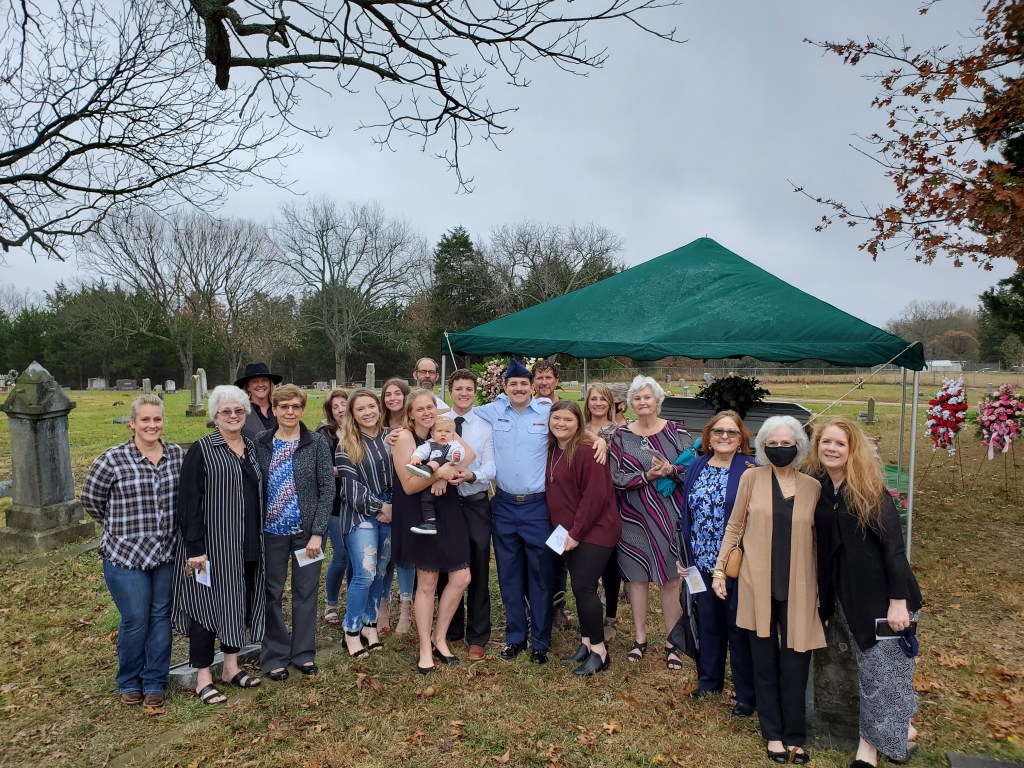
Mrs. Gorman’s family (and me, in the back), post spontaneous, unsolicited eulogy.

Parents: Leave Your Egos at the Door

Consider this scenario: Your son was exposed to a toxin about three weeks ago. Ever since then, you’ve noticed he lacks energy and is behaving a little differently. At first, it’s nothing remarkable or worrisome. He seems lethargic, but he has been having trouble sleeping, so that makes sense. He doesn’t have an interest in doing things he normally enjoys, but maybe his interests have simply changed. This isn’t unusual with teens, right? Then he starts getting headaches, which are soon accompanied by stomach pain, even diarrhea. (Of course, he won’t tell you about the bathroom stuff, but you have ears and your Spidey-Senses.) The head and stomach aches occur every three to four days. You worry he’ll get dehydrated, but he acts annoyed with you when you encourage him to drink more fluids.

Then you learn that a few of his friends were also exposed to the same toxin, and they’re showing similar symptoms. What do you do?  Continue reading “Parents: Leave Your Egos at the Door”